I am a political scientist who studies why and how communities with little political power organize and negotiate with their governments. My work spans LGBTQ+ and trans rights, the political economy of informal work, and democracy in the Americas.
My current research examines the surprising expansion of trans rights around the world. I work with trans-led NGOs and street-vendor unions in Miami, La Paz, and São Paulo, using ethnographic, survey, and statistical methods. I am currently interviewing trans activists in diverse countries to understand how movements translate community needs into successful policy projects. This work is supported by Canada's Social Sciences and Humanities Research Council.
I am the author of Why Informal Workers Organize (Oxford University Press), winner of the 2023 Riker Prize for the best book in political economy. My research appears in journals including the British Journal of Political Science, Comparative Politics, Comparative Political Studies, Health Affairs, and The Lancet Global Health, and has been supported by grants from Canada's SSHRC, the U.S. NIH and NSF, the American Political Science Association, and more.
The Book
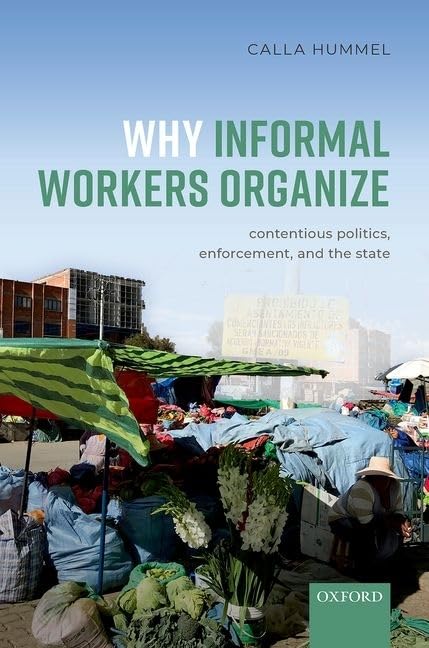
Why Informal Workers Organize
Contentious Politics, Enforcement, and the State · Oxford University Press
Why do officials so often help informal workers organize? Drawing on years of fieldwork in Bolivia and beyond, the book shows that organized workers are easier to govern, tax, and bargain with. Winner of the 2023 Riker Prize.
Read more →Recent
All announcements →