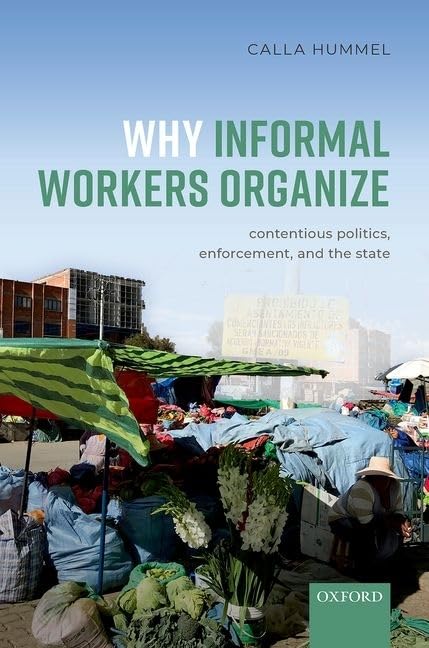
About the book
The world's two billion informal workers shape local and national politics far more than their precarious status suggests. Why Informal Workers Organize asks when and why they organize — and arrives at a counterintuitive answer: officials themselves often lower the barriers to organizing, offering cash, licenses, and access to the bureaucracy, because organized workers are easier to govern, tax, and bargain with.
Drawing on years of fieldwork with street-vendor unions in La Paz, São Paulo, and beyond, the book combines more than a hundred interviews, archival research, and original data to rethink the relationship between the state and the people on its margins. It shows that the everyday politics of informal work is not a story of weakness, but of bargaining, strategy, and surprising power.
Awards
- ★Winner, 2023 Riker Prize for the Best Book in Political Economy — American Political Science Association
- ★Honorable Mention, 2023 Best Book in Political Institutions — Latin American Studies Association
Reviewed in
Perspectives on Politics · International Labor Review · Global Labour Journal · British Journal of Industrial Relations · Work, Employment and Society · Latin American Politics and Society